Menu
Physics
Research
Physics department is an official research center approved by Mahatma Gandhi University.
There are three topics of research being pursued, currently : (i) space science (Dr. Sumod S G), (ii) materials science (Dr. Siby Mathew) and (iii) computational physics (Dr. Roby Cherian).
Research in the are of Computational Physics is aimed at 1) Development of empirical pseudopotentials, Ab-initio electronic structure calculations, extraction of model Hamiltonian parameters from ab-initio approaches, understanding the physical properties of semiconductor nanocrystals using electronic structure calculations. (2) Computational Physics approach to understand various problems in physics.
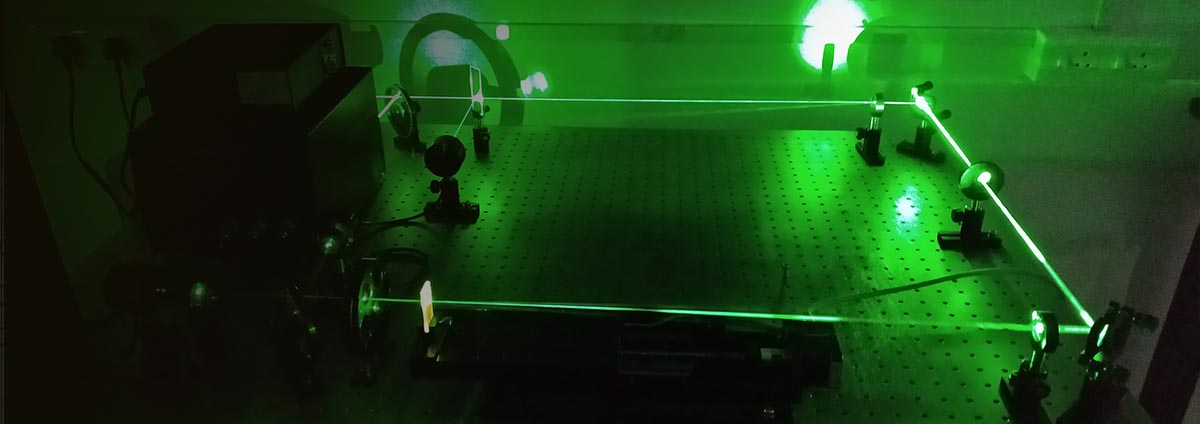
Material science division envisage a platform to investigate on advanced materials and develop hybrid smart materials for sensor and optoelectronic applications. The material science lab highlight preparation, characterization and analysis of Nano semiconductor materials, Nano metals, Dielectric materials, Doped Polymer matrices and Sol-gel composite materials. The lab encourages student research activities via projects to MPhil, postgraduate and undergraduate students. Dr. Siby Mathew is in charge of the material science division.
Dr. Pius Augustine is also carrying out research in the Material Science Division. He was granted Teacher Associateship for Research Excellence (TARE), a research award from DST_SERB, Govt. of India to continue research at Material Research Centre, Indian Institute of Science (IISc), Bangalore (Dec 2020 to Dec 2023). He is also having research collaboration with Material Science Research Centre, Indian Institute of Technology (IIT) Madras, and Superconducting Materials Laboratory, Department of Material Science and Engineering, Shibaura Institute of Technology, Tokyo, Japan. His research interest includes Ferroelectrics Piezoelectrics, 2D materials, Ferroelectric memories, valleytronics, contact engineering etc. His group work on bulk and thin films studies (Sputtering, Pulsed Laser Ablation, Thermal Evaporation).
The Space Science Group (SSG) undertakes scientific research problems concerning the connection (Coupling) between Sun and Earth with emphasis on Space Weather and Plasma processes, using multitude of experimental (both ground and space based) platforms. The outputs from these studies provide corrections (which are more relevant over magnetic dip equatorial regions like Kerala, due to the unique electrodynamics of equatorial ionosphere) to the GPS signals with the help of ionospheric modelling, thereby enabling the ‘operational forecasting’ and has societal applications. In fact, the work encompasses the themes of international programs like NASA’s Living with a Star (LWS) and Climate and Weather of the Sun-Earth System (CAWSES) very well. Further, it helps in the fundamental understanding of our space, which is useful in context of safety of spacecrafts (satellites and rockets) and astronauts. In short, the gamut of activities of SSG would help not only to improve the reliability of communication/navigation systems, but also unravel many of the unresolved scientific problems in the realm of solar terrestrial research.
Guides

Dr. Sumod S.G
Assistant Professor

Pius Augustine
Assistant Professor
Sumod S. G.
Assistant Professor
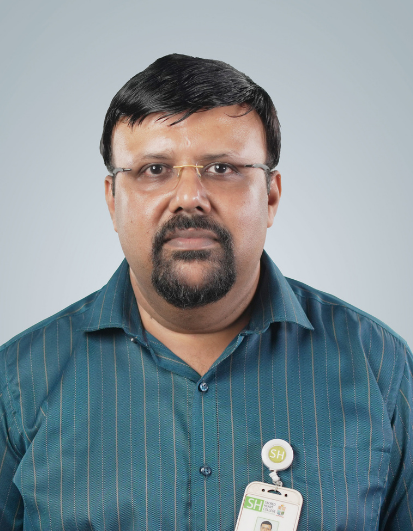
Roby Cherian
Assistant Professor

Siby Mathew
Associate Professor
Research Scholars

Mr. Sreeraj M S

Ms. Kavya Ravindran
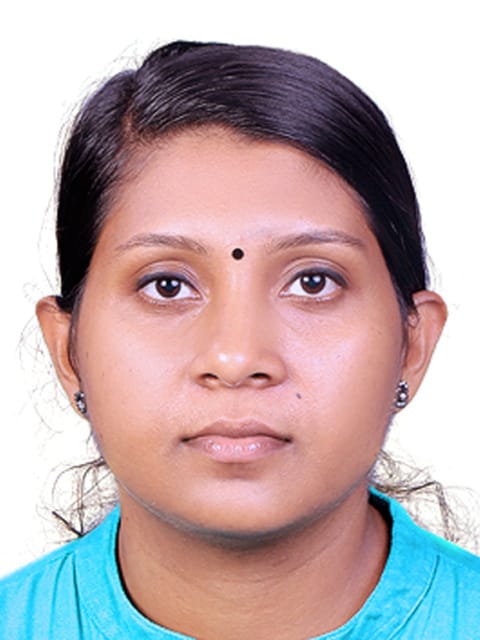
Ms. Vidhya Sivan

Mr. Kiran
Projects
Solar flare induced TEC over equatorial region
Advanced techniques for image processing for the data using 60mm refractor telescope
Computational approach to understand statistical experiment-a case study
Structural and electrical studies on bulk BCZT ceramics
HI map using antenna
DIY Spectrometer
Concentration Dependence of Refractive Index Of Sugar Solution
Theoretical Study on Tabletop Kater's Pendulum
Weather Satellite Decoder
Seismometer
Newtonian Telescope Construction
Radio Telescopes - Detection of Hydrogen Line
Hearing Through Vibrations
Assessment of Coastal Erosion Using Remote Sensing and GIS Technology at Chellanam And Vypin
Flood Plain Mapping And Monitoring Using Remote Sensing and GIS Approaches
Online Spectrometer
Bulk Modulus determination of III-V Semiconductors
Commodi ea sit enim ut nulla. Et optio dignissimos et et quo et. Facilis reprehenderit excepturi repellat esse suscipit molestias eaque. Et voluptatibus quia quas quia fuga explicabo non. Sunt est aut omnis. Occaecati non rerum. Aut dolor doloribus tempore necessitatibus cum minus deserunt. Similique sint minima harum veniam facere deleniti quia quos consequatur. Cupiditate aliquid amet dolor ut officiis nisi voluptatem.
Installation of a Flux Gate Magnetometer for the integrated current measurements over ionospheric altitudes
Installation of a Septentrio GPS receiver and Investigation of low latitude Neutral/Electrodynamical Coupling Processes using Radio Techniques
Commodi ea sit enim ut nulla. Et optio dignissimos et et quo et. Facilis reprehenderit excepturi repellat esse suscipit molestias eaque. Et voluptatibus quia quas quia fuga explicabo non. Sunt est aut omnis. Occaecati non rerum. Aut dolor doloribus tempore necessitatibus cum minus deserunt. Similique sint minima harum veniam facere deleniti quia quos consequatur. Cupiditate aliquid amet dolor ut officiis nisi voluptatem.
Commodi ea sit enim ut nulla. Et optio dignissimos et et quo et. Facilis reprehenderit excepturi repellat esse suscipit molestias eaque. Et voluptatibus quia quas quia fuga explicabo non. Sunt est aut omnis. Occaecati non rerum. Aut dolor doloribus tempore necessitatibus cum minus deserunt. Similique sint minima harum veniam facere deleniti quia quos consequatur. Cupiditate aliquid amet dolor ut officiis nisi voluptatem.
A CFL story